Collection: Debra Nakamarra Young

Debra Young Nakamarra Paintings

Quick Facts

  • Full Name: Debra Young Nakamarra

  • Born: 1964

  • Place of Birth: Papunya (Warumpi), Northern Territory, Australia

  • Community: Kintore (Walungurru), Northern Territory

  • Language Group / People: Pintupi

  • Parents: Walangkura Napanangka (mother) and Johnny Yungut Tjupurrula (father)

  • Siblings: Sisters Katherine Marshall Nakamarra and Lorraine Yungut Nakamarra, also artists

  • Art Style: Classical Pintupi dotted infill, Western Desert iconography

  • Primary Medium: Acrylic on canvas

  • Main Themes: Women's Dreaming, Tingari ceremonial stories, Tjintjintjin Country

Debra Young Nakamarra is a Pintupi artist whose paintings carry forward the Tingari stories and ceremonial knowledge inherited from her mother, the celebrated artist Walangkura Napanangka. Debra, who has painted since 1984, depicts the Women's Dreaming sites of her mother's Country, rendered in bold colour and the classical dotted infill technique that has defined Pintupi painting since its beginnings.

Early Life and Family

Debra was born in 1964 in Papunya (also known as Warumpi), the eldest daughter of two highly respected Pintupi artists, Walangkura Napanangka and Johnny Yungut Tjupurrula. As a child, she witnessed first-hand the genesis of the Western Desert painting movement at Papunya in the early 1970s.

As the homelands movement grew, Debra's family moved away from Papunya, eventually settling around the Kintore community (Walungurru), roughly 530 kilometres west of Alice Springs near the Western Australian border. Debra has two sisters who are also recognised artists, Katherine Marshall Nakamarra and Lorraine Yungut Nakamarra. Her father was a significant cultural figure within the Pintupi community, recognised as a custodian of an extensive repertoire of Dreaming stories.

Artistic Journey

Debra began painting in 1984, a pivotal moment for women's art in the Western Desert, when women artists from Kintore and Haasts Bluff began gathering to create their own paintings for the first time. Until then, women had primarily assisted the men of their families with painting, without yet creating works from their own Women's Dreaming tradition.

Debra learned to paint directly from her mother, who taught her and her sisters both the technical skills of painting and the ceremonial stories connected to their family's Country, including the Women's Dreaming sites associated with the ancestral figure Kutungka Napanangka.

The Tingari Stories and Tjintjintjin

The subject of Debra's paintings is her mother's Country, centred on the rockhole and cave site of Tjintjintjin, roughly 70 kilometres west of Kintore near the Western Australian border. This site sits on the songline of the Creation Ancestor Kutungka Napanangka, who travelled through the Country on her journey east toward Muruntji, south-west of Mount Liebig.

Under Tingari law, the places where the Ancestor stopped during her journey became significant ceremonial sites, and women continue to sing the songs and perform the dances associated with this journey today. These Women's ceremonial stories provided the subject matter for Debra's work from the beginning, a tradition shared with her sister Katherine. Her paintings represent the topography of this Country, including its stony hills, sand dunes, and rockholes, with different works depicting different aspects of the broader story. As with all Tingari knowledge, these stories remain a carefully protected body of cultural information, with only general details shared publicly.

Style and Technique

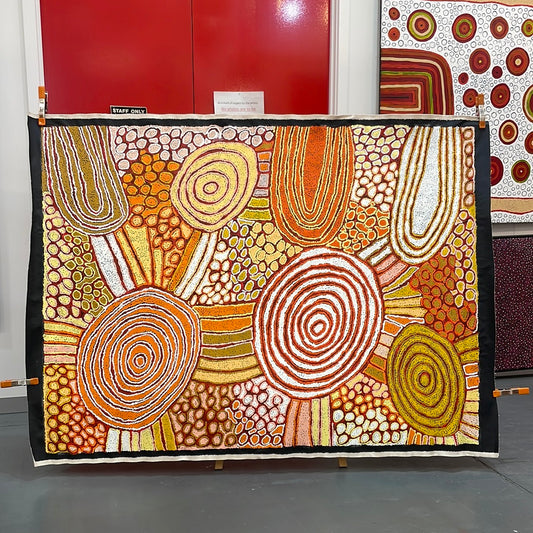
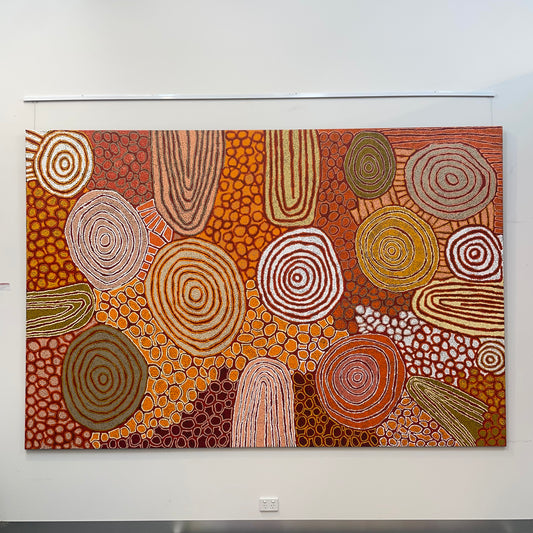
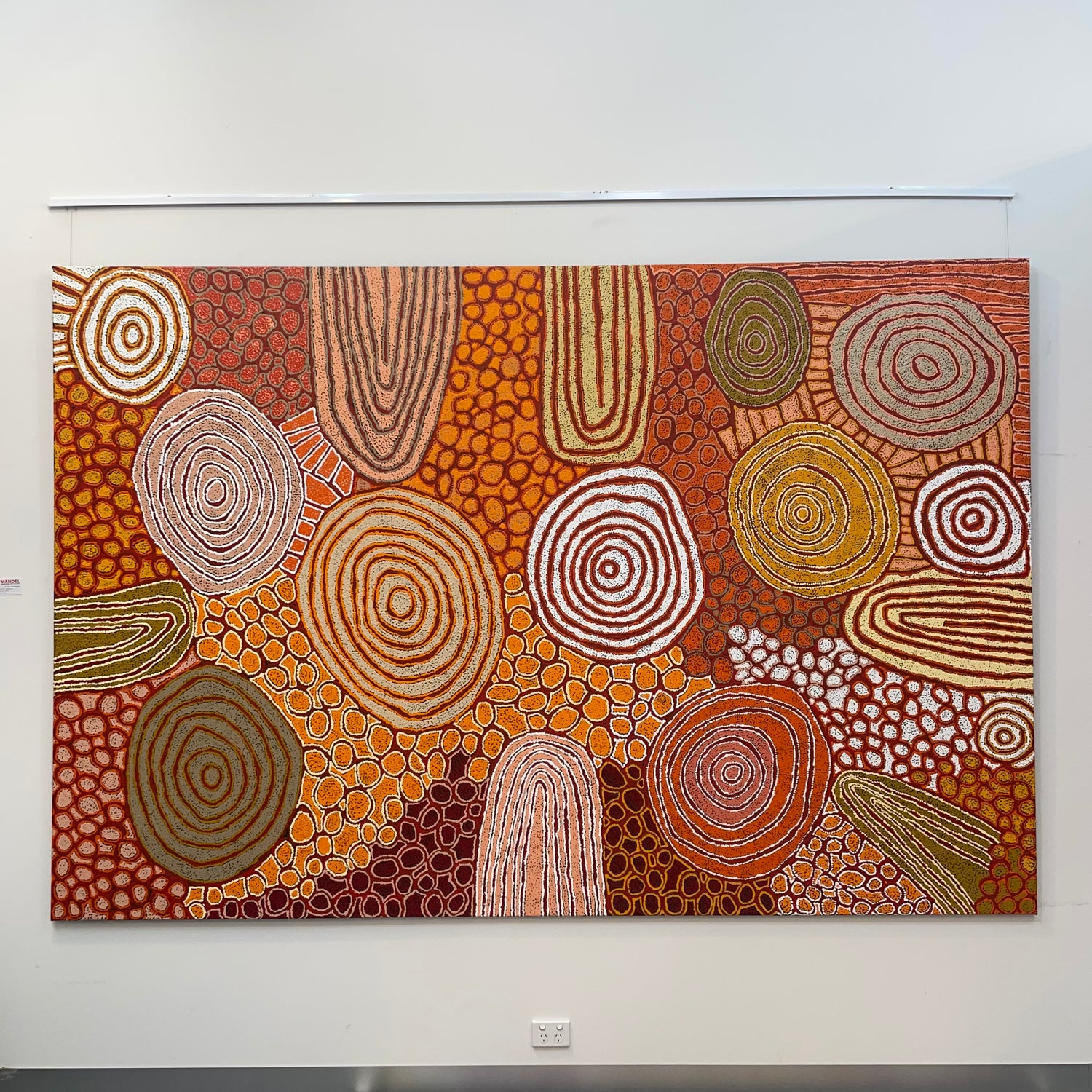
Debra employs the classical Pintupi painting style, built on dense dotted infill and traditional Western Desert iconography. The motifs she uses closely echo those found in her mother's paintings, drawing on the same visual language passed down through the family. At the same time, Debra's compositions and bold colour choices give her work a distinct individual character.

She favours the warm reds and oranges associated with her mother's palette, layering them with other vibrant, sometimes unexpected colours that bring energy and contrast to her compositions. This combination of inherited iconography and personal colour sensibility has allowed Debra to build a recognisable body of work, distinguishing her practice within the broader Papunya Tula tradition while remaining clearly connected to her family's artistic lineage.

Debra Young Nakamarra Paintings

A Continuing Legacy

Debra's work sits within a powerful family legacy. Her mother became one of the most acclaimed Pintupi women artists of her generation, with paintings held in major collections before her passing in 2014. Through Debra and her sisters, the ceremonial knowledge and storytelling skill that defined Walangkura's practice continue to be expressed and renewed.

Debra's paintings stand as both a personal artistic achievement and a record of cultural continuity, carrying forward sacred Women's stories that remain central to Pintupi law and identity.

Discover Authentic Aboriginal Art

If you are interested in collecting authentic works by Debra Young Nakamarra or other respected Pintupi artists, Mandel Aboriginal Art Gallery offers a carefully curated selection sourced from reputable Aboriginal-owned art centres and trusted galleries. Whether you are beginning your collection or adding to an established one, Mandel Aboriginal Art Gallery provides genuine Indigenous artworks that honour Australia's rich cultural heritage while supporting Aboriginal artists and their communities.