Collection: Walangkura Napanangka

Quick Facts

Born: c. 1938–1940
Died: 2014
Language Group: Pintupi
Region: Kintore, Northern Territory & Kiwirrkurra, Western Australia
Birthplace: Tjiturulnga

Walangkura Napanangka

Walangkura Napanangka (c. 1946 - 2014) was a giant of the Australian contemporary art movement. She was a Pintupi woman of enormous cultural insight and grew to become one of the greatest desert painters of her age. Her work represents a textured rhythmic map of the Pintupi soul and the jagged beauty and the profound spiritual history of the Western Desert.

Early Life and the "Walk In"

Walangkura was born in the late 1940s at Tjitururrnga, west of Kintore in the Northern Territory. She was brought up in a traditional nomadic family that was totally dependent on the land. Her family was among the last groups of the Pintupi people to come into contact with what later came to be known as modern Australia in 1956, when they moved into the Haasts Bluff settlement, and subsequently Papunya. This shift in a thousand-year-old lifestyle to a settled mission-like living was shocking, but Walangkura retained a strong attachment to her own ancestral narratives and the “Songlines” of her native land.

Artistic Style and the Painted Landscape

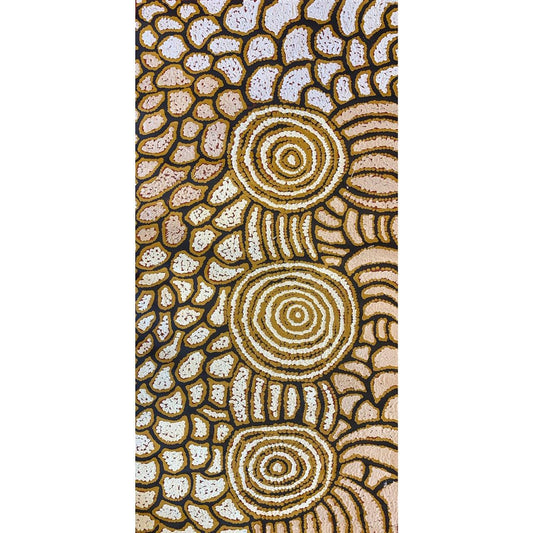
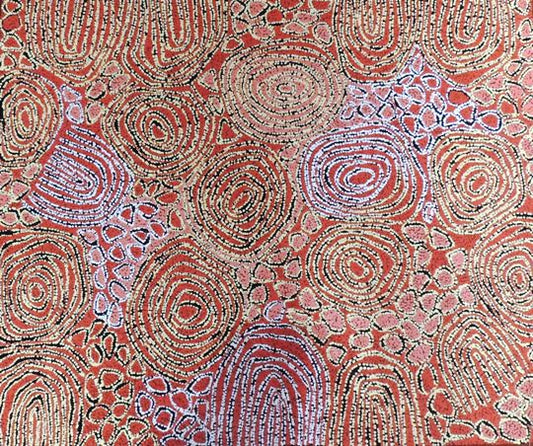
While the Papunya Tula art movement began in the early 1970s, it was dominated by men for decades. It wasn't until the Kintore-Haasts Bluff canvas project in 1994 that Walangkura and other women began to paint on a large scale. Her style is instantly recognisable for its tactile density; she used thick, gestural applications of acrylic paint to create a physical "crust" on the canvas. The prevailing colours in these works are deep ochres, burnt oranges, and lively reds, which resemble the shifting sands of the Gibson Desert.

She often painted the Kutjungka (ancestral women) and the places that were connected with women's ceremonies with U-shapes and concentric circles as an indication of campsites and sacred waterholes.

Awards & Recognition

Her work had achieved huge recognition, among which she won the prestigious Telstra National Aboriginal and Torres Strait Islander Art Award in 2005. Her works today form part of the permanent collection of the National Gallery of Australia and the Art Gallery of New South Wales and will continue to be a timeless linkage between the ancient sands of the Pintupi homelands and the global art scene.

Collapsible content

1997, 1998, 1999, 2002 – Araluen Arts Centre, Alice Springs

1998 – Sztuka Aborygr now (Art of Aborigines), Warsaw, Poland

1999 – Flinders Art Museum, Flinders University, Adelaide

2001 – Pintupi, Alice Springs

2003 – Gallery Gabrielle Pizzi, Melbourne

Cultural Significance and Legacy

Walangkura was much more than an artist; she was an elder Law Woman and an indispensable storehouse of native wisdom. She is significant because she was able to put the "Grandmother's Law" into a visual language that appealed around the world. Her paintings served as a land title, which kept records of the holy places she was responsible for preserving in accordance with her culture. She also changed the course of history by transforming the Western Desert movement into a bolder, more colour-oriented period, which led to future generations of female Aboriginal artists receiving the attention they rightfully deserved.

The canvases of Walangkura Napanangka are filled with the vigour of a woman who experienced two worlds. She managed to convey the spiritual allure of the desert, so her tales of her people, the women who trailed the land, will never be forgotten. She died in 2014, leaving her legacy of strength, readiness to take cultural pride and a body of work that keeps conferring on the strength of Australian Aboriginal art.