Collection: Dora Mbitjana

Dora Mbitjana Paintings

Quick Facts

  • Full Name: Dora Mbitjana (also recorded as Dora Mpetyane)

  • Born: 1965

  • Place of Birth / Origin: Ahalpere Country, Utopia region, Northern Territory

  • Community: Atnwengerrp, Utopia, Northern Territory (currently based in Alice Springs)

  • Language Group / People: Anmatyerre

  • Family Relations: Minnie Pwerle (mother) and Motorcar Jim (father),  Barbara Weir and Betty Mbitjana (sisters), Emily Kame Kngwarreye (great-aunt)

  • Painting Since: Began in batik in the 1970s–80s; painting professionally from the early 2000s

  • Art Style: Awelye (Women's Ceremony) body paint designs, Bush Plum and Bush Melon Dreaming

  • Primary Medium: Acrylic on canvas (formerly batik on silk)

  • Main Themes: Awelye Atnwengerrp, Ahakeye (Bush Plum) Dreaming, Bush Berry Dreaming, Country

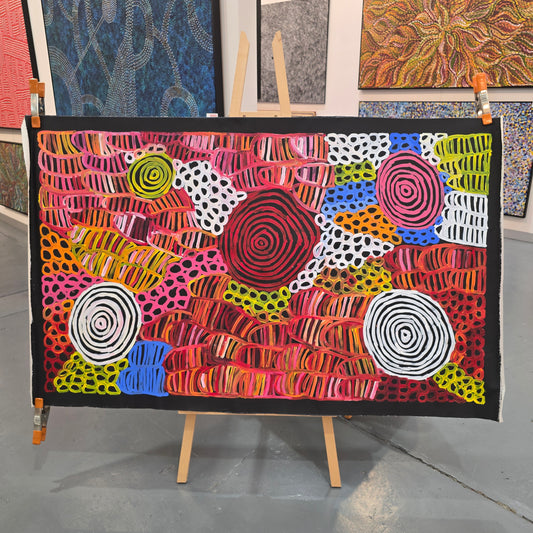
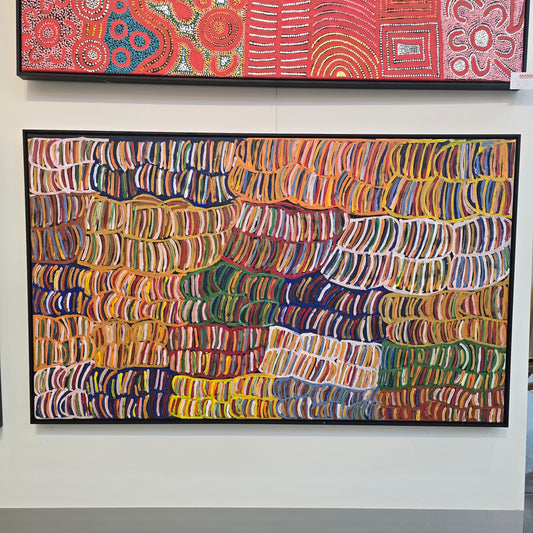
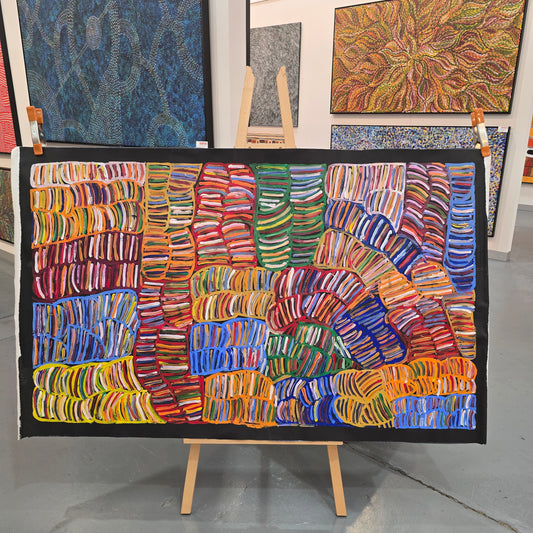
Dora Mbitjana is an Anmatyerre artist from the Utopia region of Central Australia, carrying forward the Awelye (Women's Ceremony) tradition made famous by her mother, the celebrated artist Minnie Pwerle. The youngest of Minnie's children, Dora paints body-paint designs, bush-melon roundels, and ceremonial motifs of her mother's Country, Atnwengerrp, in a vibrant, multicoloured style that has become distinctly her own.

Early Life and Family

Dora was born in 1965 in Ahalpere Country, within the Utopia homelands, roughly 230 kilometres north-east of Alice Springs. She grew up immersed in one of the most significant family lineages in contemporary Aboriginal art. Her mother, Minnie Pwerle, became internationally celebrated for her bold abstract paintings, while her great-aunt was the equally renowned Emily Kame Kngwarreye. Dora's father was Motorcar Jim.

Dora is the youngest of Minnie's seven children. Her sisters Barbara Weir and Betty Mbitjana both became respected artists, painting within the same family tradition. Utopia has historically had no government-funded art centre, meaning artistic knowledge there has always passed through family rather than formal institutions, making Dora's connection to her mother and sisters central to her development as an artist.

From Batik to Canvas

Like many women of her generation in Utopia, Dora's practice began not with acrylic but with batik. During the 1970s and 1980s, more than eighty women across the region worked in this medium, producing silk batik that documented their Dreaming stories and ceremonial designs. Her work was featured in the landmark publication and touring exhibition Utopia: A Picture Story, which brought the region's textile art to audiences in Ireland and Scotland in 1990.

Dora later transitioned to acrylic on canvas, beginning her painting career in earnest in the early 2000s, around the same time that her mother, Minnie's reputation grew significantly within the contemporary Aboriginal art market.

Awelye and the Stories of Atnwengerrp

Dora's paintings depict her mother's Country, Atnwengerrp, in the northern reaches of the Utopia region. Her primary subject is Awelye, the Women's Ceremony and associated body paint designs that have been part of her family's practice for generations, passed to her in part by her sister Betty.

Awelye refers to the ceremonial body painting performed by Aboriginal women to demonstrate respect for the land and ensure the wellbeing of their community. During these ceremonies, which can last up to a week, women apply painted designs to their breasts, arms, and thighs while singing songs connected to ancestral travel and the totemic plants, animals, and natural forces of their Country. Dora learned these designs by watching her mother and aunts transfer them from skin to canvas.

Her paintings also draw on the Ahakeye (Bush Plum) Dreaming and the Bush Berry Dreaming, themes connected to the gathering of bush tucker central to Anmatyerre women's lives, often represented through small circular motifs.

Dora Mbitjana Paintings

Style and Technique

Dora's compositions combine large roundels representing soakages and waterholes, the sites around which ceremonies take place, with smaller roundels depicting bush melons and bush plums. While the traditional ceremonial colours associated with her Atnwengerrp Dreaming are red and white, Dora is known for working across a much broader palette, bringing her own colour sensibility to designs rooted in her mother's style.

Artistic Legacy

Dora's work sits within one of the most significant artistic families in Australia. Both her sisters achieved senior standing as artists before their passing, and her aunts, Emily, Galya, and Molly Pwerle, continued painting into their late nineties and beyond. Her work has been exhibited at Kate Owen Gallery in Sydney and Pwerle Aboriginal Art Gallery, and is held in collections including the Holmes à Court Collection in Perth.

Dora continues to live in Alice Springs with her children and grandchildren, returning often to her homelands of Atnwengerrp, carrying forward the Awelye tradition that defined her mother's legacy for new generations.

Discover Authentic Aboriginal Art

If you are interested in collecting authentic works by Dora Mbitjana or other respected Utopia artists, Mandel Aboriginal Art Gallery offers a carefully curated selection sourced from reputable Aboriginal-owned art centres and trusted galleries. Whether you are beginning your collection or adding to an established one, Mandel Aboriginal Art Gallery provides genuine Indigenous artworks that honour Australia's rich cultural heritage while supporting Aboriginal artists and their communities.