Collection: Dituan Ross Tjampitjin

Dituwan Ross Tjampitjinpa artworks

Dituwan Ross Tjampitjinpa

In the realm of contemporary Indigenous Australian art, few Aboriginal artists capture the vast, undulating energy of the Western Desert with as much precision as Dituwan (Dituan) Ross Tjampitjinpa. A master of the Pintupi style, his work serves as a rhythmic map of his ancestral lands, blending ancient sacred narratives with a sophisticated, modern aesthetic.

Heritage and Artistic Lineage

Dituwan Ross was born in 1969 at Papunya, Northern Territory, a location synonymous with the birth of the Western Desert art movement. He belongs to the Pintupi language group, a culture known for its deep spiritual connection to the remote desert regions stretching toward the Western Australian border.


Dituwan’s artistic pedigree is formidable. He is the son of the late Ross Gidgie (Kay) Tjapaltjarri, a highly respected artist from whom he inherited the rights to paint significant Dreamings. Growing up in the heart of the Papunya Tula movement, Dituwan was mentored by the legendary "old men" of the desert, learning to translate the physical landscape into a complex language of symbols and dots.

Master of the "Tali" (Sandhills) Dreaming

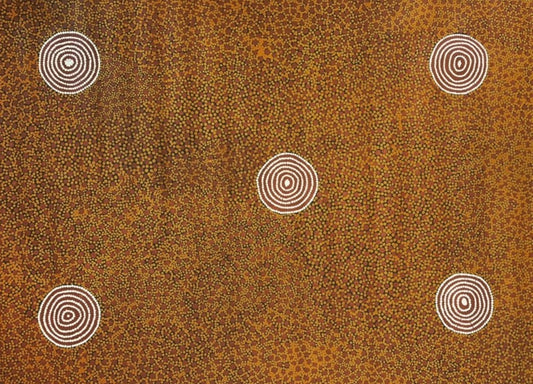
Dituwan is best known for his mesmerising depictions of Tali (Sandhills). For Dituwan, these are not merely landscape studies, but profound visual records of survival and spiritual law (Tjukurpa).

  • The Geometry of Survival

    His work maps the sandhills near Lake Mackay (Wilkinkarra) and Kintore. Within these rows of dunes, he hides the locations of vital rockholes and soakages (Kapi), identifying life-giving sites known to his ancestors.

  • The Tingari Connection

    The lines of the sandhills represent the literal paths taken by the Tingari ancestors as they travelled across the desert, performing ceremonies and singing the world into existence.

  • Optical Vibration

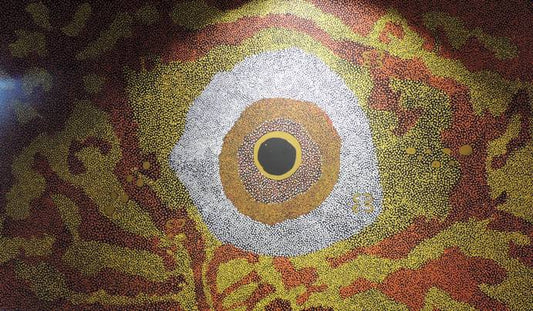
    Dituwan uses thousands of meticulously placed, overlapping dots to create sweeping, curved lines. This technique mimics the movement of wind across the dunes and the shimmering heat haze of the desert, giving the canvas a sense of perpetual motion.

Style and Technique

While Dituwan often utilises traditional ochre tones, reds, oranges, and creams, he is also celebrated for his use of bold, contemporary colours that capture the desert at sunset or after the rare rains. His "birds-eye" perspective turns topographical features into an abstract, shimmering tapestry that serves as a "songline" in visual form.

dituwan ross tjampitjinpa aboriginal art collection

Exhibitions and Recognition

Dituwan Ross Tjampitjinpa’s work has gained significant traction among international collectors. His career highlights include:

  • 2015: Western Desert Masters, Sydney.
  • 2018: Desert Songlines, Melbourne.
  • 2021–2026: Featured extensively in curated collections focusing on the evolution of Pintupi abstraction.
Visit Gallery