Collection: Delvine Pitjara

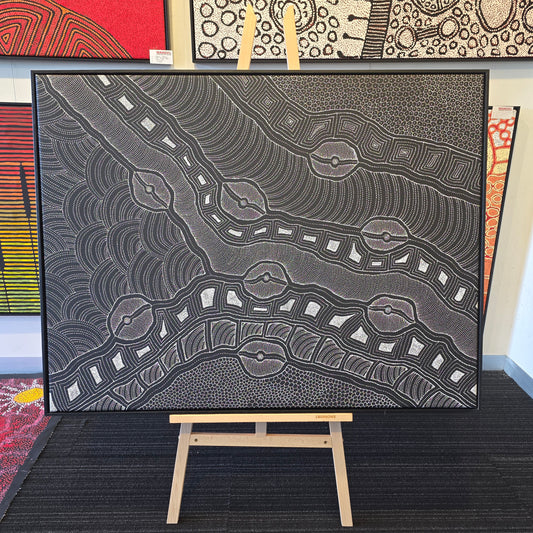
Delvine Pitjara artworks

Quick Facts – Delvine Petyarre

Name: Delvine Petyarre

Born: Utopia, Central Desert (270 km North East of Alice Springs)

Family Influence: Mentored by renowned artists Jeannie Petyarre and Rosemary Petyarre

Artistic Focus: Bush tucker, Bush Yam Dreaming, and country

Key Themes: Bush yam, seed collection, flour-making for damper, ceremonial homage

Delvine Pitjara is a modern icon in the art scene of the Australian Indigenous people, renowned due to her use of bold palettes and her skill in transferring the ancient landscape of the Utopia area into engaging modern art masterpieces. Being a part of one of the most distinguished artistic dynasties in Australia, Delvine has created a distinctive space for herself by combining tradition and her bold, individualistic style.

Roots in the Heart of Utopia

Delvine was born in 1982, in the Alyawarre language group, Utopia, about 230 kilometres northeast of Alice Springs. She is a descendant of a line of famous female artists; she is the daughter of the late Anna Price Petyarre and niece to the globally renowned Gloria Petyarre.

Delvine grew up in her native country at Mulga Bore and was surrounded by the sights and tales of the bush. She observed the elder women of her own family, pioneers of the desert art movement process, carefully marking their Dreaming (Aboriginal spiritual mapping) using batik and subsequently on canvas.

Style and Iconography

The most recognisable feature of Delvine’s work is its complex dot-work and a highly refined sense of colour, which plays upon the earthly ochres alternately with the vivid and contemporary colour. Her style is a rhythmic exploration of the resources of her country and roots.

Key themes in her portfolio include:

delvine pitjara aboriginal art

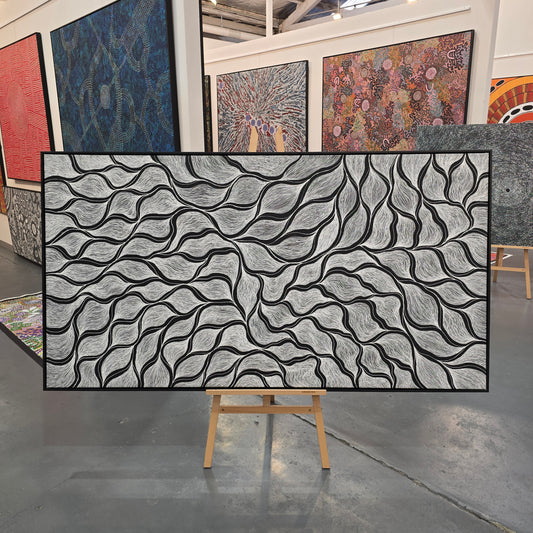
Bush Medicine Leaves

Based on the Kurrajong tree, Delvine portrays the movement of the leaves as they are collected to be used in healing. Her version is characterised by movement, as though leaves are blowing in a desert wind.

bush yam painting delvine pitjara

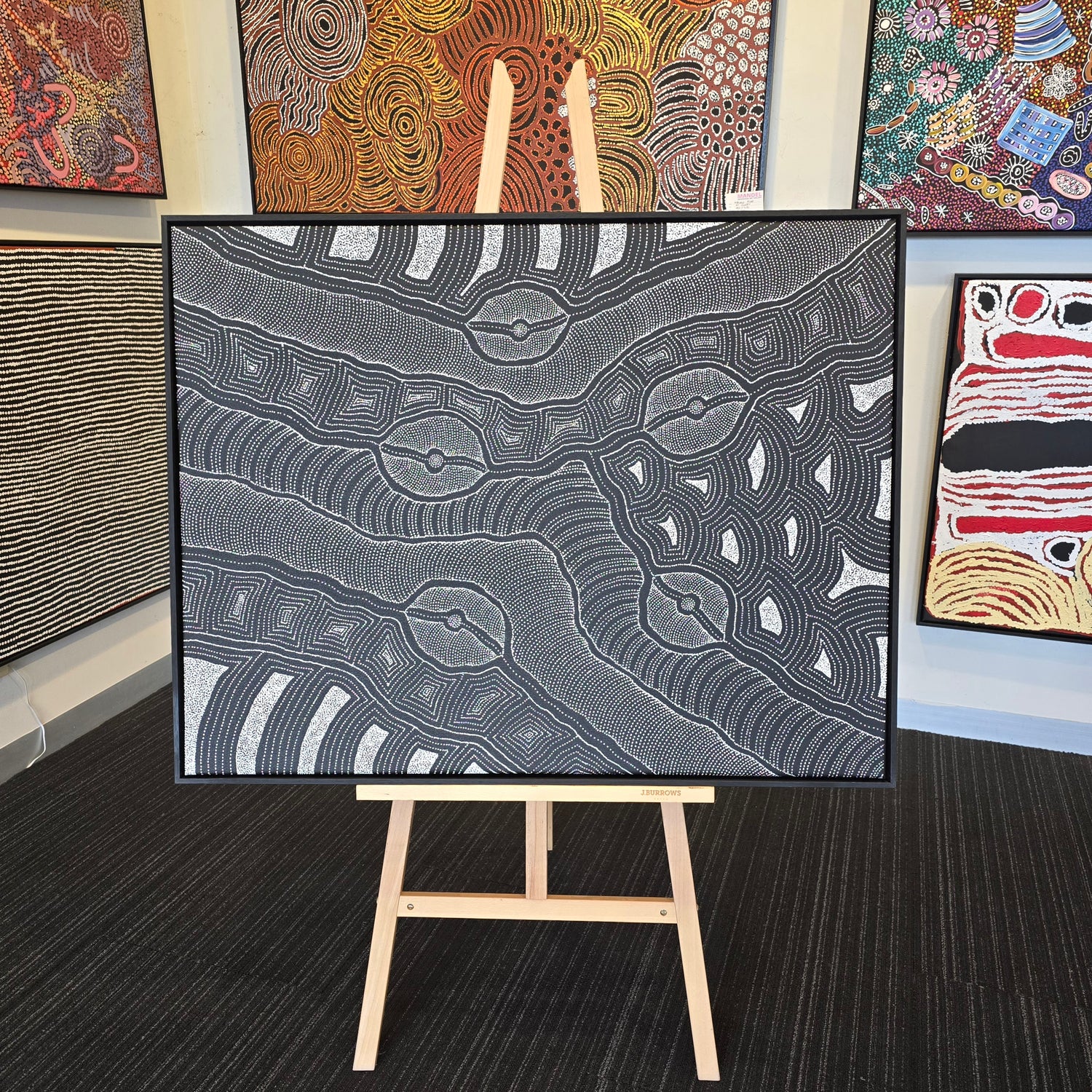
Bush Yam (Atnwelarre)

One of the main narratives of the women of Utopia, this Dreaming is a tribute to the native desert tuber, which is the source of food and sustainability. Delvine’s work describes the extensive root systems and the spiritual meaning of the plant.
Buy Bush Yam
buy delvine pitjara my county paintings

Sand Hills & Waterholes

Through fine dotting, she develops topographical maps of the deserted world, accentuating the sources of life-giving waters buried beneath the rippling dunes.

Buy My County Paintings

Exhibitions and Recognition

Delvine started working with galleries when she was 19 years old and soon established a reputation for her sophisticated technique. Her reputation as an emerging master has been ingrained through her participation in major exhibitions both locally and globally.

Notable exhibition highlights include:

Collapsible content

2004: A major group exhibition at Mbantua Gallery in Nashville, Tennessee, which introduced her work to a North American audience.

2018: Featured in the Desert Dots III exhibition.

2020: Headline artist in the My Country exhibition series.

2022: Her composition was included in the Connection immersive experience in the National Museum of Australia in Canberra, which presented the songlines of First Peoples in high-definition digital projections.

Her paintings are held in several respected private and permanent collections. While her career is still ascending, she is widely regarded by gallerists as one of Utopia’s most talented and versatile rising stars.

A Modern Masterpiece

While she respects the techniques that her mother and aunts taught her, Delvine is also recognised by her fearless attitude towards colour. The masterful harmony between complex, small elements and the sweeping, expansive sense of scale has made her work very popular with collectors who value the transition between classic storytelling and contemporary interior design. Her paintings are not just decorative, but living records of the persistent attachment of the Alyawarre people to the land.