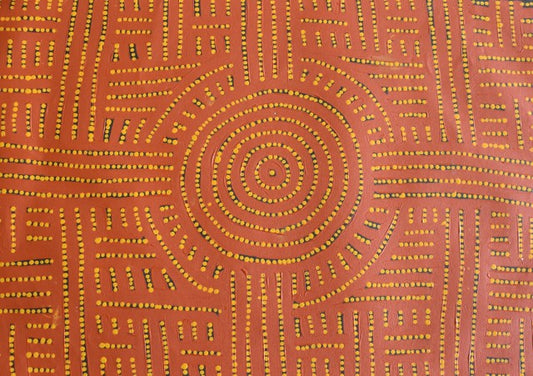
Collection: Bombatu Napangardi

Bombatu Napangati Paintings for sale

Quick Facts

Name: Bombatu Napangati

Born: c. 1954s

Birthplace: Winron, Pintupi Country (east of Kiwirrkura, WA border)

Language / Cultural Group: Pintupi

Key Themes: Women’s ceremony, Wiyarra (Rock Hole), mother’s country

Country Depicted: Western Australia–Northern Territory border region

Style Elements: Sand hills (Tali), geometric dotted lines, ceremonial sites

Art Focus: Sacred women’s places and desert landscape traditions
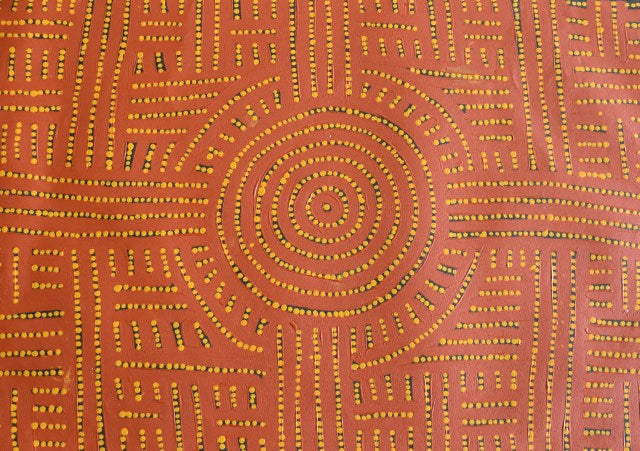
Bombatu Napangardi was a distinguished Pintupi artist whose work serves as a vibrant bridge between the ancient traditions of the Australian Western Desert and the contemporary global art world. Born circa 1952 near the site of Haasts Bluff in the Northern Territory, Bombatu’s life and art were deeply rooted in the Tjukurrpa (Dreaming), the foundational religious and cultural framework of Aboriginal life.

Bombatu Napangati Art Collection Western Desert Paintings

Early Life and Cultural Roots

Bombatu grew up during a transformative era for the Pintupi people. Her family lived a traditional nomadic lifestyle before eventually moving to the community of Papunya and later to Kiwirrkurra, one of the most remote settlements in Australia.

As a woman of the Napangardi group, she was a custodian of specific sacred sites and stories passed down through generations. These ancestral tracks, or "Songlines," would eventually become the primary subject matter of her intricate canvases.

Gift Authentic Aboriginal Art

Artistic Style and Evolution

Bombatu began painting in the late 1990s, joining the renowned Papunaya Tula art movement. While many Pintupi artists are known for bold, geometric lines, Bombatu’s style was celebrated for its rhythmic, textured application of dots.

Her work primarily depicted:

  • Marrapinti: A sacred site associated with the nose-bone piercing ceremony.
  • Water Soakages: Representing life-sustaining rock holes in the arid desert.
  • Bush Tucker: Intricate mappings of desert raisins and other traditional foods.

Her palette often favoured the earthy ochres of the desert, burnt oranges, deep reds, and creamy whites, though she occasionally experimented with softer pastels to represent the changing light on the sandhills.

Legacy and Recognition

Throughout her career, Bombatu Napangardi gained significant recognition for her technical precision and cultural depth. Her paintings have been exhibited in major galleries across Australia and internationally, securing her place as a vital voice in female Aboriginal artistry. Her work is not merely decorative; it is a topographical and spiritual map of a landscape she knew intimately.

Bombatu Napangardi passed away in 2012, leaving behind a legacy of resilience and beauty. Through her brushes, she preserved the ephemeral traces of the desert and ensured that the stories of the Pintupi people would be told in the hallowed halls of international galleries. Her art remains a testament to the enduring connection between the Indigenous people of Australia and their ancestral lands.