Collection: Barney Ellaga

Barney Ellaga Paintings

Quick Facts

Born: c. 1939, Hodgson Downs, Northern Territory
Died: 2015
Community: Ngukurr, South East Arnhem Land
Language Group: Alawa
Cultural Role: Senior Jungai (lawman & custodian)
Art Style: Bold colour fields, topographical abstraction

Barney Ellaga (c. 1939 - 2015) was a senior Alawa lawman and one of the most significant figures in contemporary Australian Aboriginal art. Hailing from the Ngukurr community in South East Arnhem Land, Ellaga’s work is celebrated for its vibrant use of colour and its deep, ancestral connection to the "Rock Country."

Early Life and Cultural Roots

Born circa 1939 at Hodgson Downs in the Northern Territory, Barney Ellaga was a senior custodian of the Alawa community. As a "Jungai" (guardian or lawman) for several sacred sites, he held total authority over the entry of non-countrymen into these areas and was responsible for maintaining the traditional heritage of the Alawa people.
His language group was Alawa, and he belonged to the Yirritja moiety and Guyal semi-moiety. This deep-seated cultural responsibility informed every brushstroke of his career, as his paintings were not merely aesthetic exercises but a visual record of his traditional homelands and the Dreamings associated with them.

Artistic Development and Style

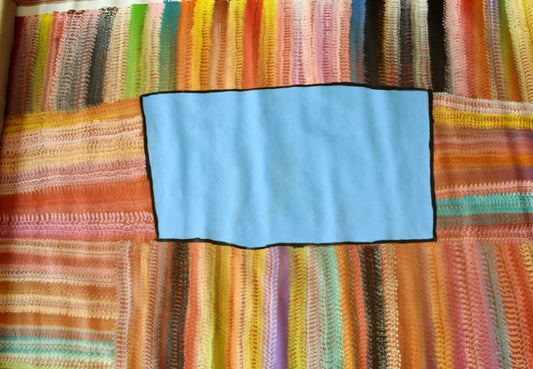
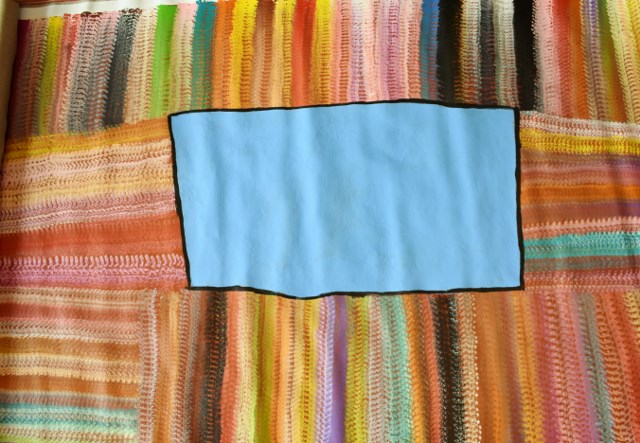
Ellaga’s work is instantly recognisable for its distinctive, bold, and energetic style. While many Aboriginal artists from the Northern Territory utilise traditional earthy tones, Ellaga was a pioneer in using extraordinary colour complements to contour the Alawa terrains.
Central to his oeuvre are the King Brown (snake) Dreaming, the story of earth’s creation, and the Sugar Bag Dreaming. A defining feature of Ellaga’s art is its deep connection to Country. In Aboriginal culture, land is not simply physical space; it is alive with spiritual significance and ancestral presence. Ellaga’s paintings reflect this relationship, often representing landscapes through symbolic, topographical forms rather than realistic imagery. Through these works, he communicates a perspective in which people, land, and story are inseparably linked, giving his art a sense of continuity and purpose.

Storytelling and Cultural Significance

Storytelling sits at the core of Ellaga’s practice. As with many Aboriginal artists, his role extended beyond creation into cultural transmission. His works communicate narratives that have been passed down through generations, often relating to creation stories, journeys, and relationships between humans and the natural world. Importantly, he approached this responsibility with care, ensuring that sacred or restricted knowledge remained protected.
This balance between sharing and safeguarding adds depth to his work and reflects his role as a cultural custodian. Each painting becomes more than an artwork; it becomes a vessel of knowledge, carrying stories that continue to live through visual form. For viewers, this creates an opportunity to engage with Aboriginal perspectives in a way that is both respectful and meaningful.

Techniques and Materials

Ellaga is closely associated with traditional bark painting, a practice that involves painting on prepared eucalyptus bark using natural pigments such as ochre and charcoal. The process requires patience and precision, from harvesting and curing the bark to applying intricate cross-hatched patterns. His use of these materials reinforces the connection between the artwork and the land itself, making each piece a physical extension of Country.

The fine detailing and rhythmic compositions seen in his work are hallmarks of Arnhem Land art and demonstrate a high level of craftsmanship. Even as his work entered gallery spaces, he maintained this commitment to traditional techniques, ensuring that his art remained grounded in cultural practice.

Exhibitions and Recognition

Since his first exhibitions in 1989, Barney Ellaga’s work has gained immense international recognition. He was part of a prestigious group of Ngukurr artists, including Ginger Riley Munduwalawala and Gertie Huddleston, who redefined the world’s perception of Indigenous Australian art.
His works are held in some of the most prestigious collections in Australia and abroad, including The National Gallery of Australia, The National Gallery of Victoria, The Kerry Stokes Collection, and The Macquarie Bank Collection, Sydney
Even after his passing in August 2015, Ellaga’s influence remains potent, with his paintings continuing to feature in major exhibitions such as Tjungai (2025) and The Last Song Man (2023). His most notable exhibitions include:

Collapsible content

'The Last Song Man' Orange Regional Gallery (Sep - Nov 2023)

'NGUKURR - Artists of the Rock Country' (May - June 2022)

'Minimalism in Aboriginal Art' (April 2022)

'Mother, Country, Tjukurrpa' (Feb - March 2022)

'Place of Stones' (April 2016)

Legacy and Influence

Barney Ellaga passed away in 2015, but his contribution to the Aboriginal art movement can be remembered by his commitment to maintaining tradition while engaging with contemporary audiences. He forms part of a broader movement that has elevated Aboriginal art to international prominence while preserving its integrity. His work demonstrates that cultural knowledge and artistic expression can evolve without losing their foundations.

Today, Barney Ellaga’s work continues to be valued for its cultural depth, technical skill, and storytelling power. His paintings offer insight into one of the world’s oldest living cultures, inviting viewers to engage with perspectives that are both ancient and ongoing. As interest in Aboriginal art grows, his legacy remains an important part of that story, grounded in Country, guided by tradition, and shared through art.

Discover Authentic Aboriginal Art

Explore available works and upcoming auction lots to experience the vibrant spirit of the Northern Territory with Mandel Aboriginal Art Gallery. Contact us or visit our gallery to dive deep into Aboriginal art.