Collection: Alwyn Brokus Tjapanangka
-
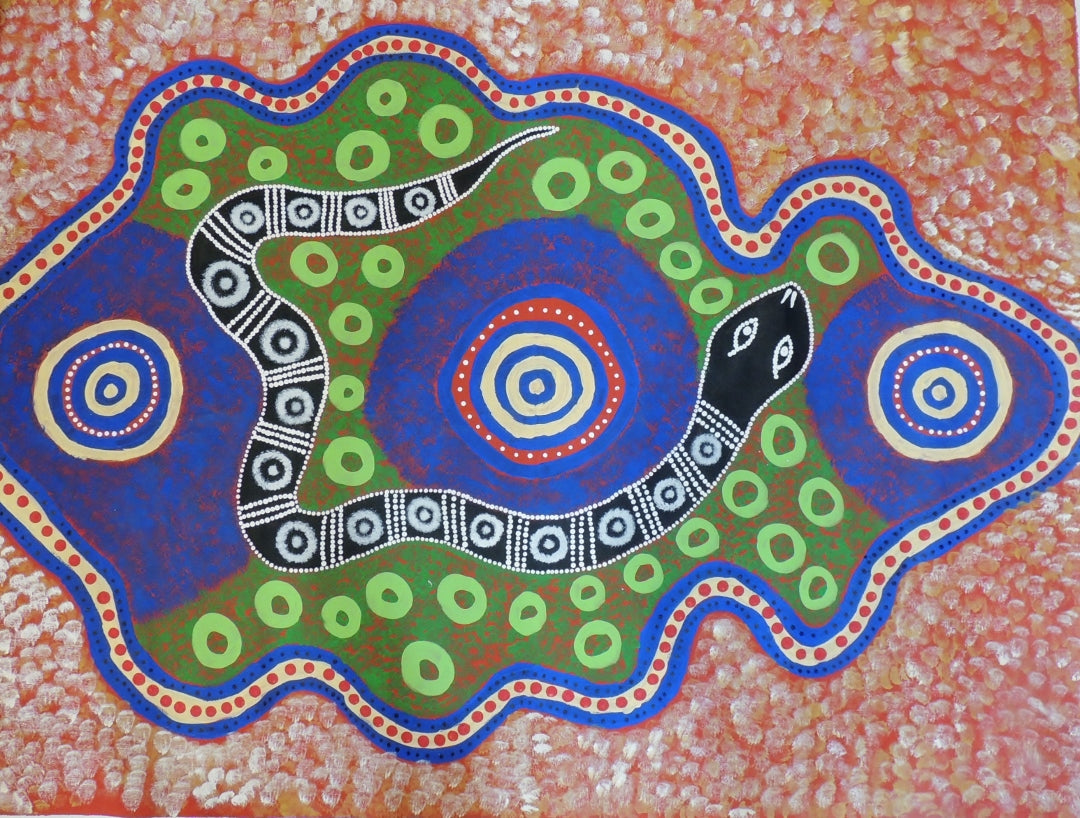
Alwyn Brokus Tjapanangka 88cm x 120cm
CODE : 2451Vendor:Alwyn Brokus TjapanangkaRegular price $0.00 AUDRegular priceUnit price / perSale price $0.00 AUDSold out
In the evolution of Western Desert art, Alwyn Brokus Tjapanangka stands as a master of structural precision. His work is a powerful testament to the enduring strength of the Pintupi and Luritja traditions, transforming the ancient songlines of the Australian interior into sophisticated contemporary masterpieces. Renowned for his ordered compositions and rhythmic intensity, Alwyn’s paintings map both the physical and spiritual contours of a landscape he knows intimately. His work serves as a vital bridge between tradition and modernity, making it highly regarded among collectors and galleries worldwide.
Heritage and Early Influences
Alwyn Brokus Tjapanangka was born in 1968 at Papunya, widely recognised as the cradle of the contemporary Aboriginal art movement. He belongs to the Pintupi and Luritja language groups, cultures deeply connected to the vast desert regions west of Alice Springs.
Growing up during the height of the Papunya Tula movement, he was surrounded by pioneering artists who shaped the trajectory of modern Aboriginal art. Under the guidance of his elders, he was schooled in sacred iconography and the cultural laws associated with the Tingari Cycle, creation stories of ancestral beings who travelled across the land, forming its features and establishing the moral and physical law of the people. This deep cultural foundation provided him with the authority to translate these ancestral narratives into a visual form that functions as both story and map.
The Tingari Cycle and Sacred Cartography
The central theme of Alwyn’s artwork is the Tingari Dreaming. While his paintings are often interpreted by the uninitiated as aerial maps of the desert, they operate on a far deeper spiritual level, serving as a form of sacred cartography.
Through his work, he documents ancestral journeys and the intricate paths taken by Tingari men and women as they shaped cultural law. His canvases frequently highlight sacred landmarks and significant ceremonial sites such as Kiwirrkura and Kintore, alongside hidden water sources.
These vital soakages and rockholes, essential for desert survival, are typically represented by concentric circles. These elements combine to form a visual language that encodes ancient knowledge of land, survival, and spirituality.
Artistic Style and Technical Mastery
Alwyn’s paintings are distinguished by a striking balance between minimalism and complexity. His work is defined by a rigorous geometric structure, often featuring grid-like arrangements and interconnected pathways that symbolise ancestral tracks.
His technical mastery is evident in his precise and deliberate dot application, which builds immense texture on the surface of the canvas. By utilising the repetition of geometric forms, he creates a visual vibration that gives the impression of latent movement and energy.
This structured approach is often rendered in a high-contrast palette, including ochre reds, deep blacks, and soft whites. This repetition is not merely an aesthetic choice; it reflects ceremonial rhythms, echoing the chanting and cultural performances of the Western Desert.
Signature Style and Recognition
Alwyn is best known for his highly structured interpretations of the Tingari Dreaming, standing out for his clarity, discipline, and strong adherence to traditional Pintupi storytelling methods. While he does not focus on a single universally recognised masterpiece, his reputation is built on a consistent and recognisable visual language that defines his artistic identity.
He is particularly celebrated for his ability to translate complex Dreamtime narratives into geometric compositions while maintaining cultural authenticity. As a second-generation Western Desert artist, Alwyn has played a significant role in bringing Pintupi art to a global audience, making his work highly desirable among international collectors who value both visual strength and cultural integrity.
Explore Aboriginal Art at Mandel Aboriginal Art Gallery
For those interested in discovering authentic Aboriginal art, Mandel Aboriginal Art Gallery offers a carefully curated collection of works by talented Indigenous artists. Whether you are exploring new artists or expanding your collection, the gallery provides access to high-quality, culturally significant artwork along with expert guidance. Explore a diverse collection of authentic Aboriginal artwork in Australia. Discover emerging talents like Aileen Adamson and connect with the rich heritage of Indigenous Australian art.