
-
 Sold out
Alvira Bird 1400 mm x 2400 mm
CODE : 6907Vendor:Alvera BirdRegular price $6,800.00 AUDRegular priceUnit price per$0.00 AUDSale price $6,800.00 AUDSold out -
 Sold out
Alvera Bird 1100 mm x 2300 mm
CODE : 6909Vendor:Alvera BirdRegular price $4,900.00 AUDRegular priceUnit price per -
Alvira Bird 1130 mm x 1500 mm
CODE : 6908Vendor:Alvera BirdRegular price $2,900.00 AUDRegular priceUnit price per -
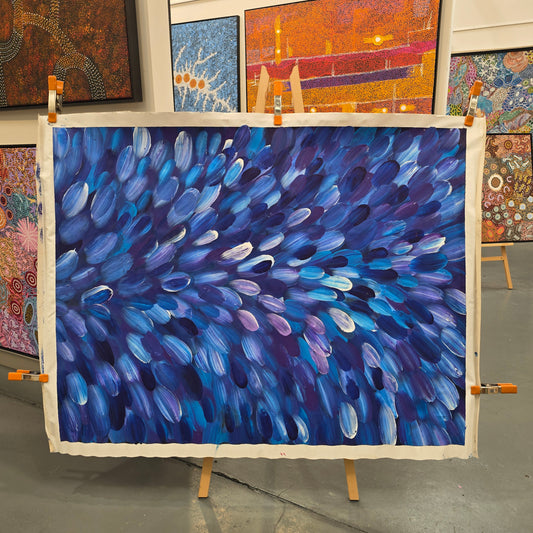
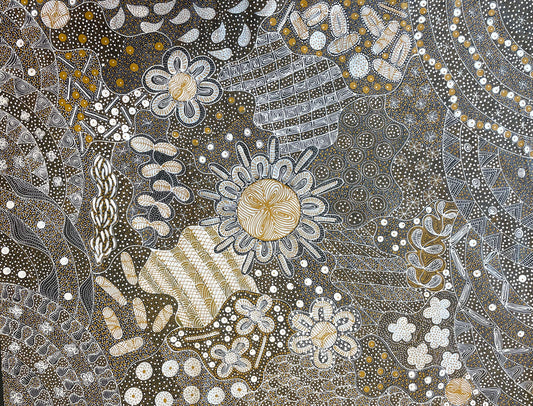 Sold out
Alvera Bird 1100 mm x 1435mm
CODE : 7727Vendor:Alvera BirdRegular price $3,500.00 AUDRegular priceUnit price per



Quick Facts
Date of Birth: 1984
Place of Birth: Utopia Region, Northern Territory, Australia
Language Group: Anmatyerre
Country: Ilkawerne (Utopia Region, northeast of Alice Springs)
Style of Art: Contemporary Aboriginal painting focused on Awelye (Women’s Ceremony) themes
Subjects: Awelye for Ahakeye (Bush Plum), Alpar (Rat-tail Plant), and Ntang Artety (Mulga Seed)
Aboriginal Art Status: Established emerging artist with works held in private collections in Australia and internationally
Heritage and Artistic Lineage

The "Arnwetky" (Bush Plum) Dreaming
At the heart of Alvera’s creative practice is the Arnwetky, or Bush Plum Dreaming, a narrative of immense cultural and nutritional significance to the Anmatyerre people. The bush plum (Santalum lanceolatum) is a hardy shrub that produces small, dark fruits, which have been a staple food source in the Utopia region for millennia.
In Alvera’s hands, the plant transcends its physical form to become a symbol of ancestral power and seasonal resilience. Her paintings serve as a visual record of the plant's life cycle, from the flowering triggered by the rare desert rains to the ripening of the fruit.
Furthermore, these works are deeply connected to "Women’s Business" or Awelye; the patterns often mirror the ceremonial body paint designs applied by women during rituals intended to pay homage to the spirit of the plum and ensure its abundance for future generations.
Style and Technique

Recognition & Global Appeal
As a second-generation Utopia artist, Alvera has successfully carried her family’s legacy into the 21st century. Her work is highly sought after for its refined elegance and its ability to sit harmoniously within both traditional and ultra-modern interiors. Her paintings have been exhibited in major Australian galleries and are increasingly popular among international collectors in Europe and North America.

