-
Gloria Petyarre 1080 mm x 1980 mm
CODE : 5811Vendor:Gloria PetyarreRegular price $7,900.00 AUDRegular priceUnit price per$9,900.00 AUDSale price $7,900.00 AUDSale -
Gloria Petyarre 1500 mm x 2000 mm
CODE : 4607Vendor:Gloria PetyarreRegular price $9,500.00 AUDRegular priceUnit price per$11,500.00 AUDSale price $9,500.00 AUDSale -
Gloria Petyarre 880 mm x 2000 mm
CODE : 5994Vendor:Gloria PetyarreRegular price $9,500.00 AUDRegular priceUnit price per -
Gloria Petyarre 1500 mm x 2000 mm
CODE : 4605Vendor:Gloria PetyarreRegular price $11,000.00 AUDRegular priceUnit price per -
Gloria Peryarre 960 mm x 1520 mm
CODE : 2842Vendor:Gloria PetyarreRegular price $6,900.00 AUDRegular priceUnit price per -
Gloria Petyarre 1080 mm x 1980 mm
CODE : 5812Vendor:Gloria PetyarreRegular price $8,900.00 AUDRegular priceUnit price per -
Gloria Petyarre 1500 mm x 2000 mm
CODE : 4693Vendor:Gloria PetyarreRegular price $6,900.00 AUDRegular priceUnit price per$11,900.00 AUDSale price $6,900.00 AUDSale -
Gloria Petyarre 960 mm x 2000 mm
CODE : 5296Vendor:Gloria PetyarreRegular price $8,900.00 AUDRegular priceUnit price per -
Gloria Petyarre 950 mm x 1090 mm
CODE : 5770Vendor:Gloria PetyarreRegular price $2,450.00 AUDRegular priceUnit price per -
Gloria Petyarre 900 mm x 1500 mm
CODE : 5445Vendor:Gloria PetyarreRegular price $6,500.00 AUDRegular priceUnit price per -
Gloria Petyarre 950 mm x 1540 mm
CODE : 3319Vendor:Gloria PetyarreRegular price $6,900.00 AUDRegular priceUnit price per -
Gloria Petyarre 1080 mm x 1980 mm
CODE : 5838Vendor:Gloria PetyarreRegular price $8,500.00 AUDRegular priceUnit price per -
Gloria Petyarre 950 mm x 1540 mm
CODE : 3318Vendor:Gloria PetyarreRegular price $6,900.00 AUDRegular priceUnit price per -
Gloria Petyarre 940 mm x 1430 mm
CODE : 4567Vendor:Gloria PetyarreRegular price $4,900.00 AUDRegular priceUnit price per$7,500.00 AUDSale price $4,900.00 AUDSale -
 Sold out
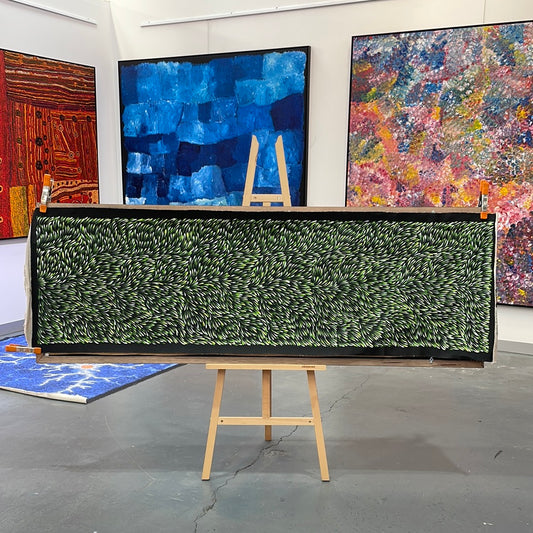
Gloria Petyarre 580 mm x 2040 mm
CODE : 4056Vendor:Gloria PetyarreRegular price $7,900.00 AUDRegular priceUnit price per -
Gloria Petyarre 900 mm x 2000 mm
CODE : 6251Vendor:Gloria PetyarreRegular price $7,900.00 AUDRegular priceUnit price per







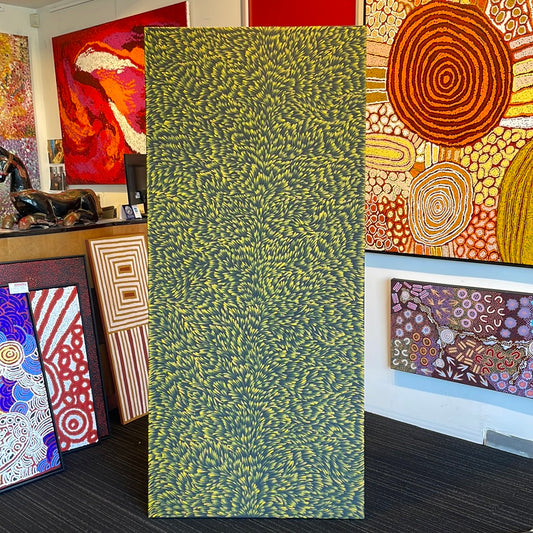

Gloria Petyarre (c.1945–2021)
Quick Facts:
Date of Birth: June 1945
Place of Birth: Atnangkere Country, Utopia Region, Northern Territory, Australia
Language Group: Anmatyerre
Style of Art: Contemporary Aboriginal painting
Aboriginal Art Status: Highly regarded artist.
Who Was Gloria Petyarre?
Country and Cultural Background
Where was she from?
The story of Gloria commences in the red earth of the Atnangkere Country, located in the remote Utopia region of the Northern Territory, which is approximately 270 kilometres northeast of Alice Springs. It is the land of Anmatyerre, a place of bitter beauty and strong spiritual meaning, which has birthed some of the most famous Indigenous artists in Australia.
Early Life and Cultural Foundations
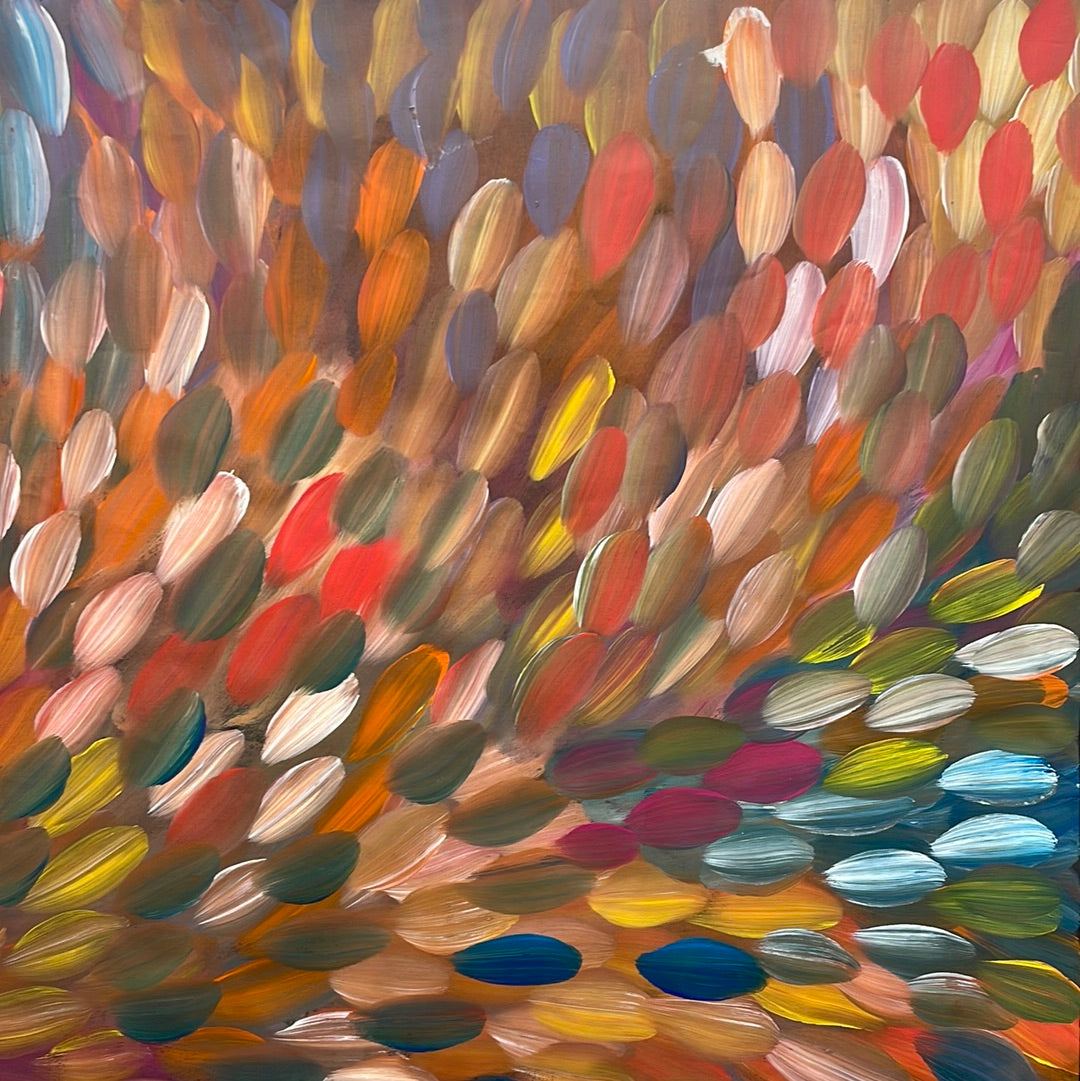
Long before a paintbrush came into her hands, Gloria was busy learning the rhythm of her home. Brought up in the conservative traditions of her tribe, her own education had been conducted beneath the great desert sky, where the elders taught her the Dreaming stories, the secret of making bush tucker survival, and the sacred Awelye (body painting) markings. This was not just knowledge but an experience. The profound attachment that she developed toward the landscape in these formative years would be the heartbeat of all her subsequent canvases.
Connection to the Utopia Art Movement
Utopia Women’s Batik Group
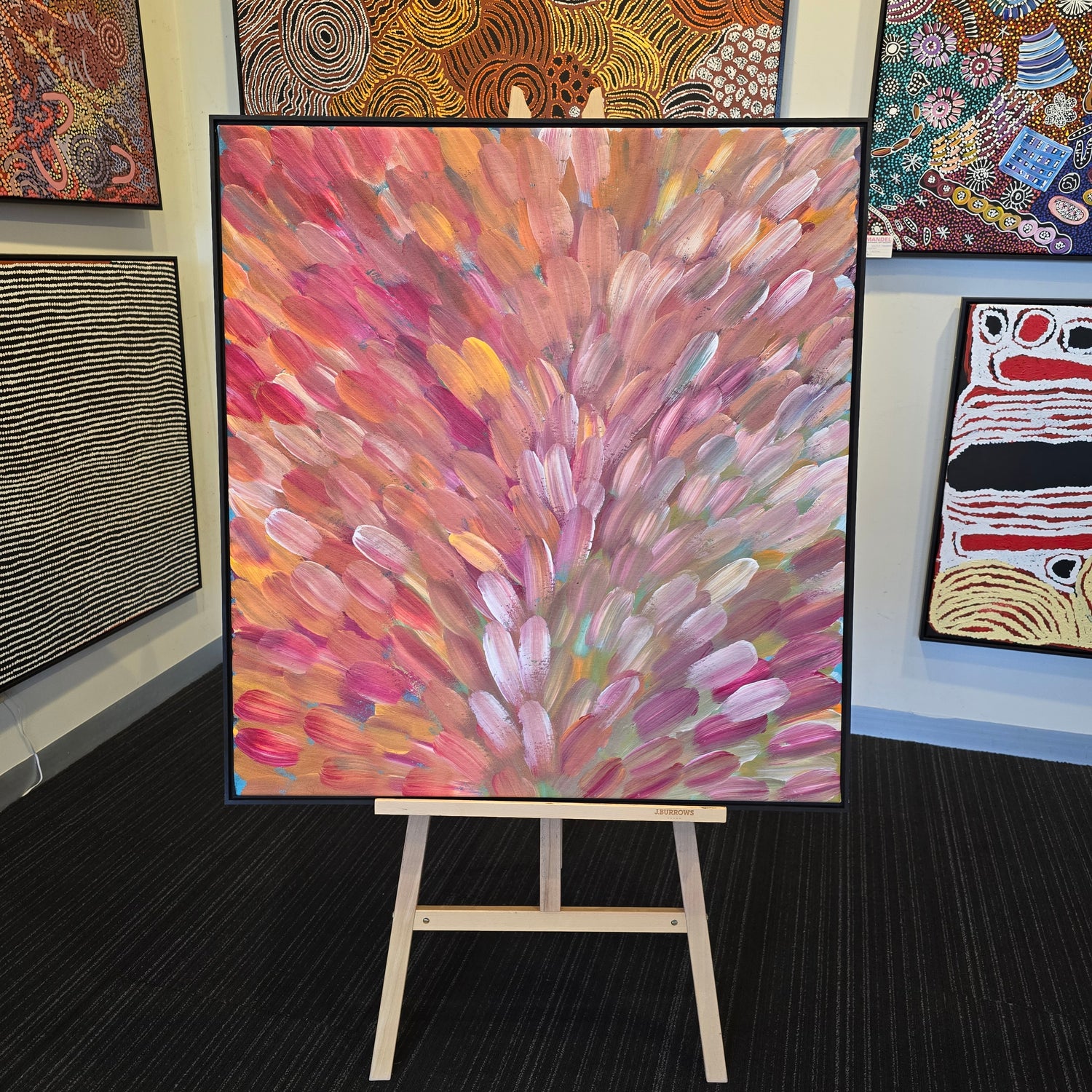
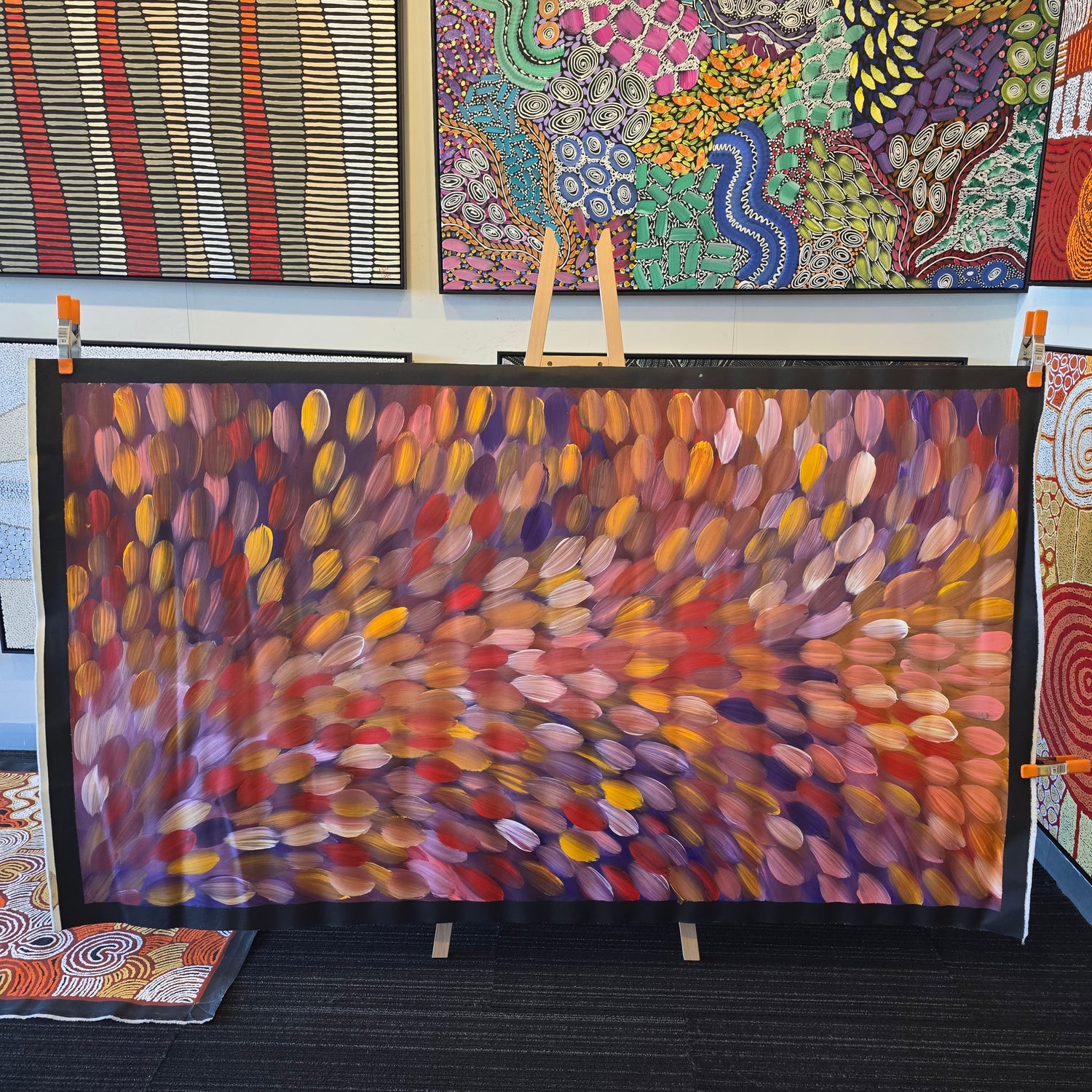
Around the end of the 1970s, a creative spark was kindled in Utopia, which would alter the history of Australian art. Gloria had been an original member of the Utopia Women Batik Group, which was a community initiative that exposed Indigenous women to silk batik art. This is where, through the odour of hot wax and colour, Gloria was taught to design on flowing cloth the patterns which are commonly painted on the body. This time period was crucial to the development of her artistic voice, where she found the loose and rhythmic movement that would later define her painting style.
From Batik to Acrylic Painting
At the end of the 1980s, the story of Utopia art changed radically. The introduction of acrylic paints and canvas was done by the Central Australian Aboriginal Media Association (CAAMA) during the summer project in 1988-89. Gloria adopted this novel medium with passion. No longer bound by the technical limitations of batik, she started to explore scale and colour, and made her brush dance across the canvas with boldness that heralded the birth of a new great talent.
Connection to the Petyarre Sisters and Other Utopia Artists
What is She Best Known For?
Bush Medicine Leaves
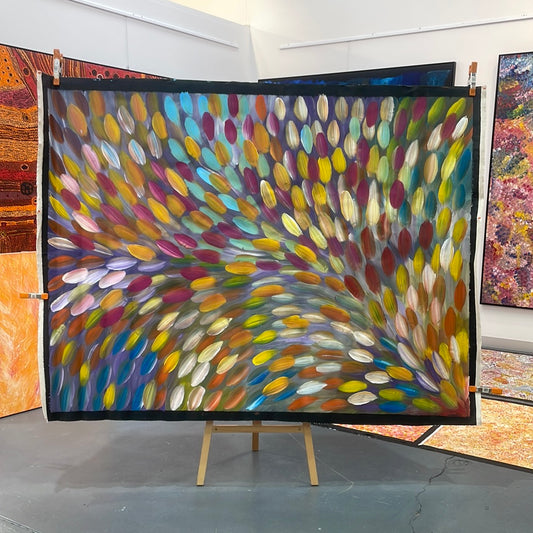
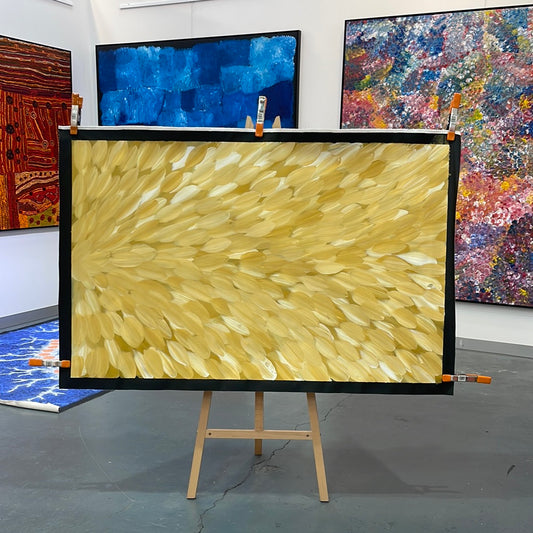
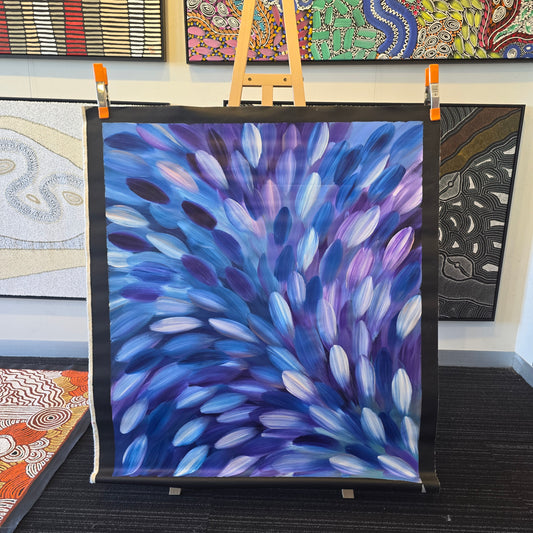
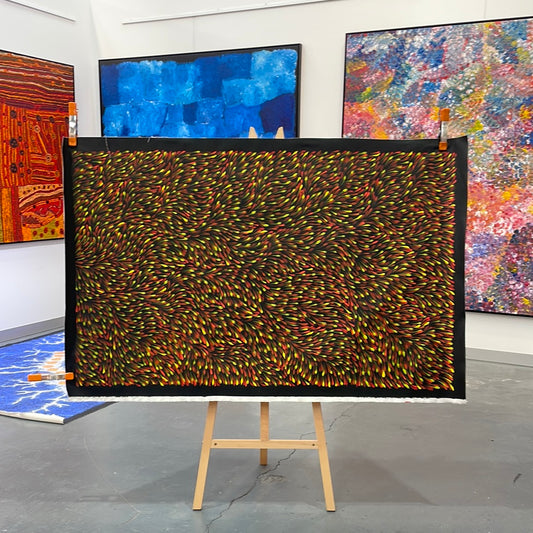
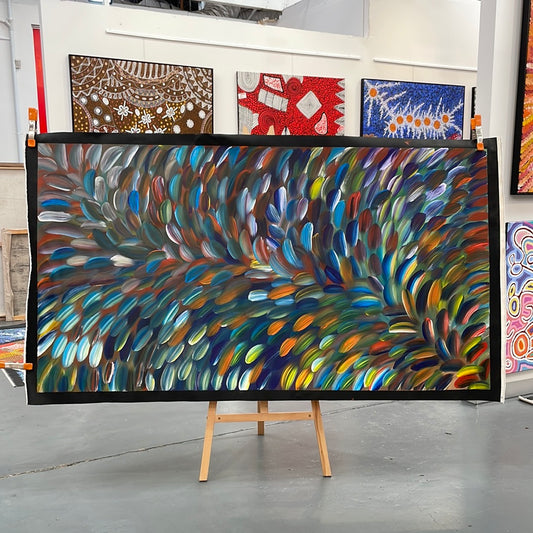
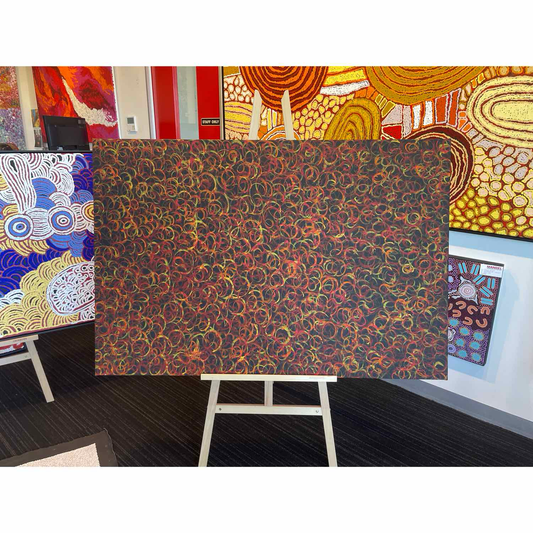
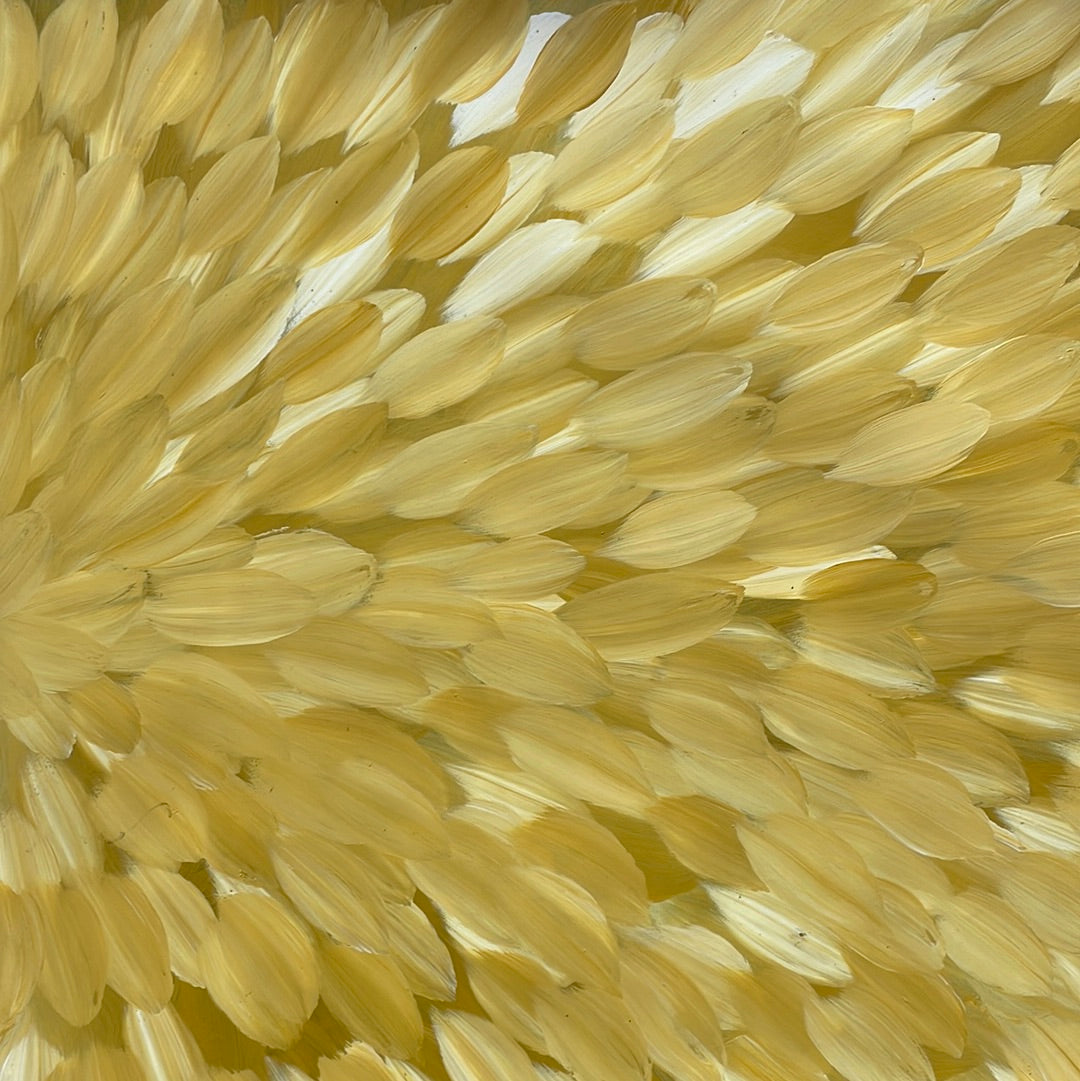
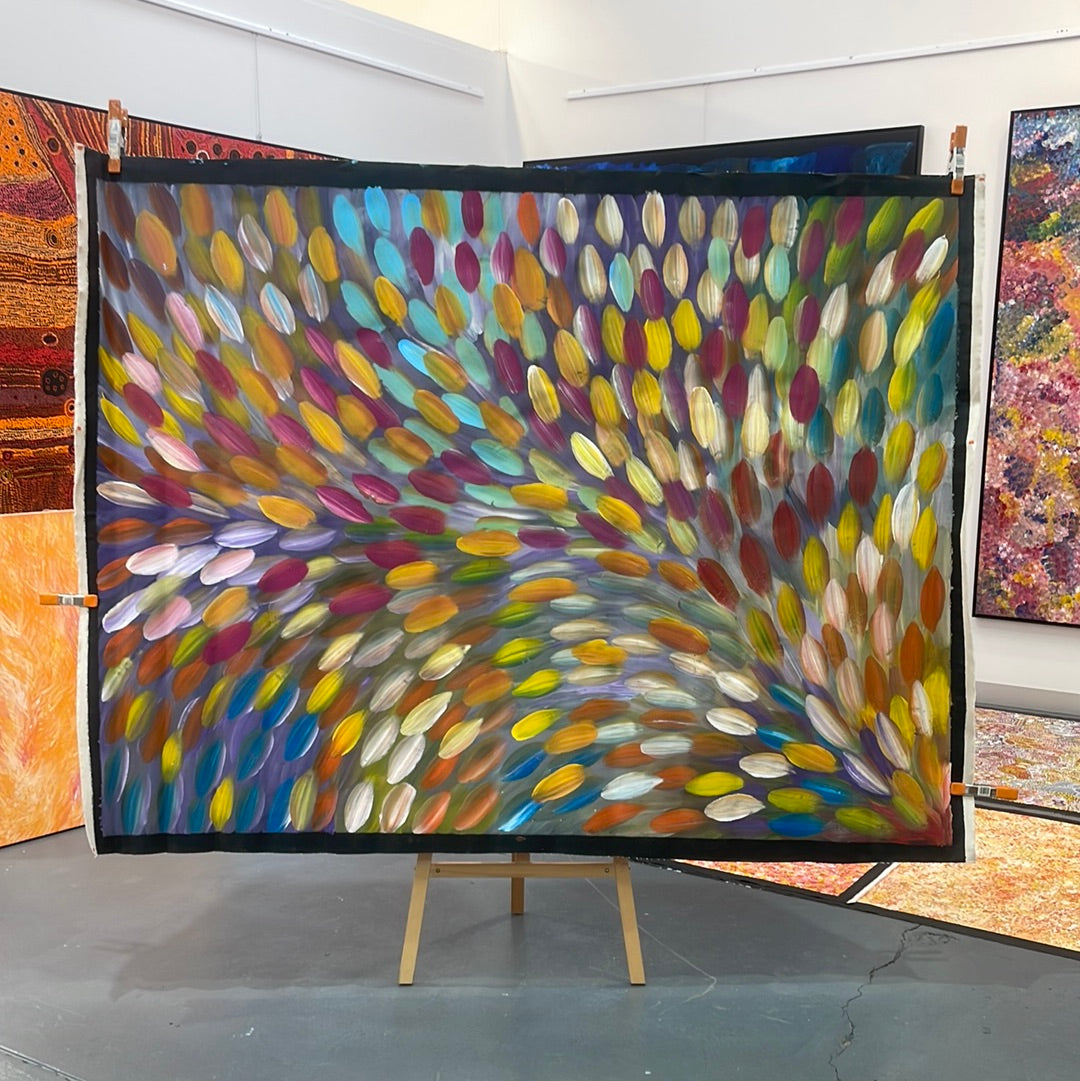
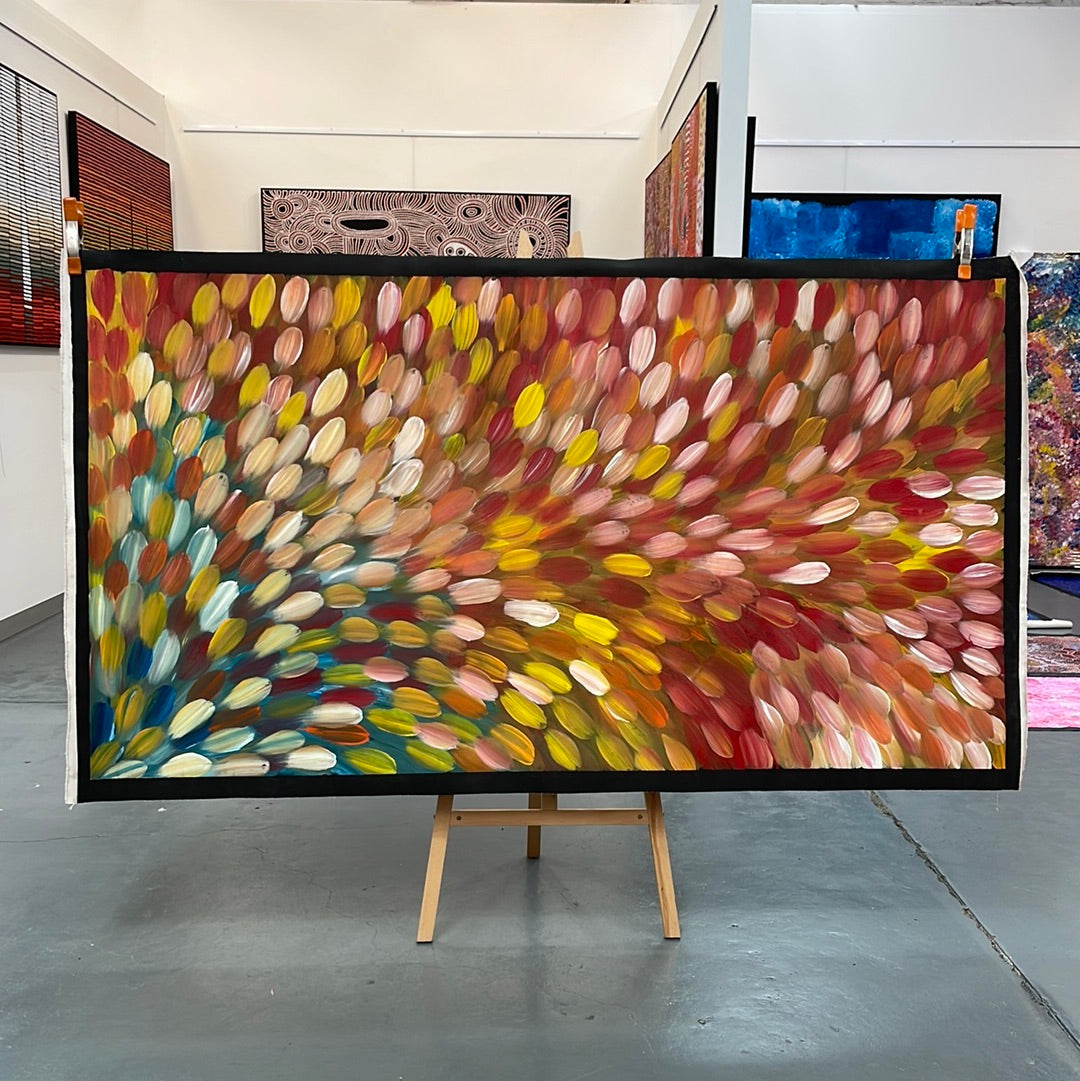
Among her contributions to the world of art, none is as easily recognised as her Bush Medicine Leaves. This is a well-known iconic collection of paintings in which Gloria depicted the leaves of the Kurrajong shrub, a shrub that Anmatyerre women valued due to its medicinal qualities. She did not, however, paint them as still botanical studies. Rather, she had painted them on the move, swirling, drifting, and dancing like they were caught in a desert breeze. They are spellbinding pieces of work, produced with rhythmic overlay akin to vibration as a symbol of continuity of female knowledge and curing nature.
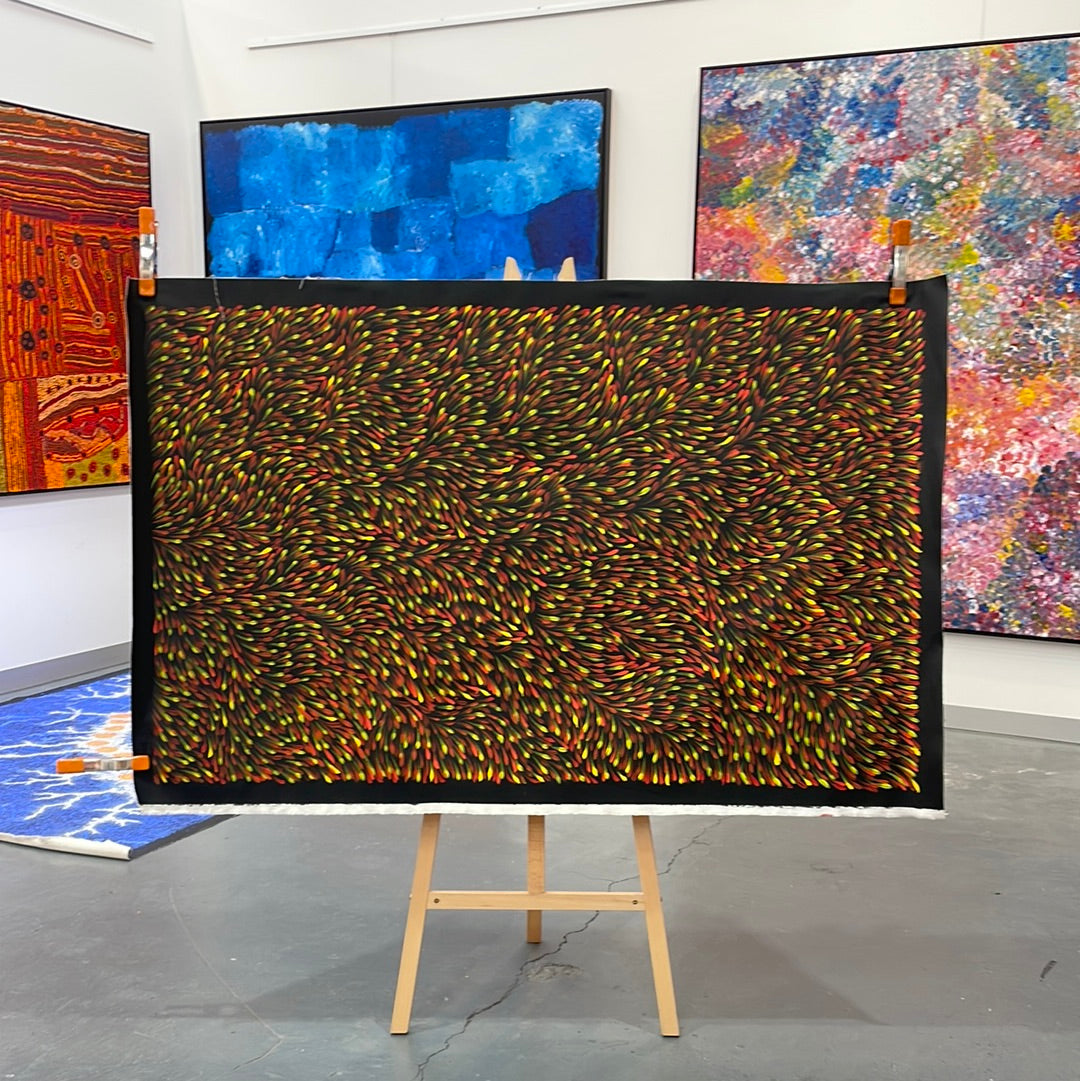
Mountain Devil Dreaming
Gloria Petyarre dedicates her life to maintaining cultural heritage and social justice work although her main focus remains in the art world. The powerful storytelling and image-making abilities of Petyarre help preserve Anmatyerre cultural wisdom as she ensures its transmission to the forthcoming generations.
Through her art, Petyarre generates social transformation by fighting Indigenous stereotypes while building better cultural understanding between people.
Dreaming stories and themes in her work
What Defines Gloria Petyarre’s Artistic Style?
Key visual characteristics
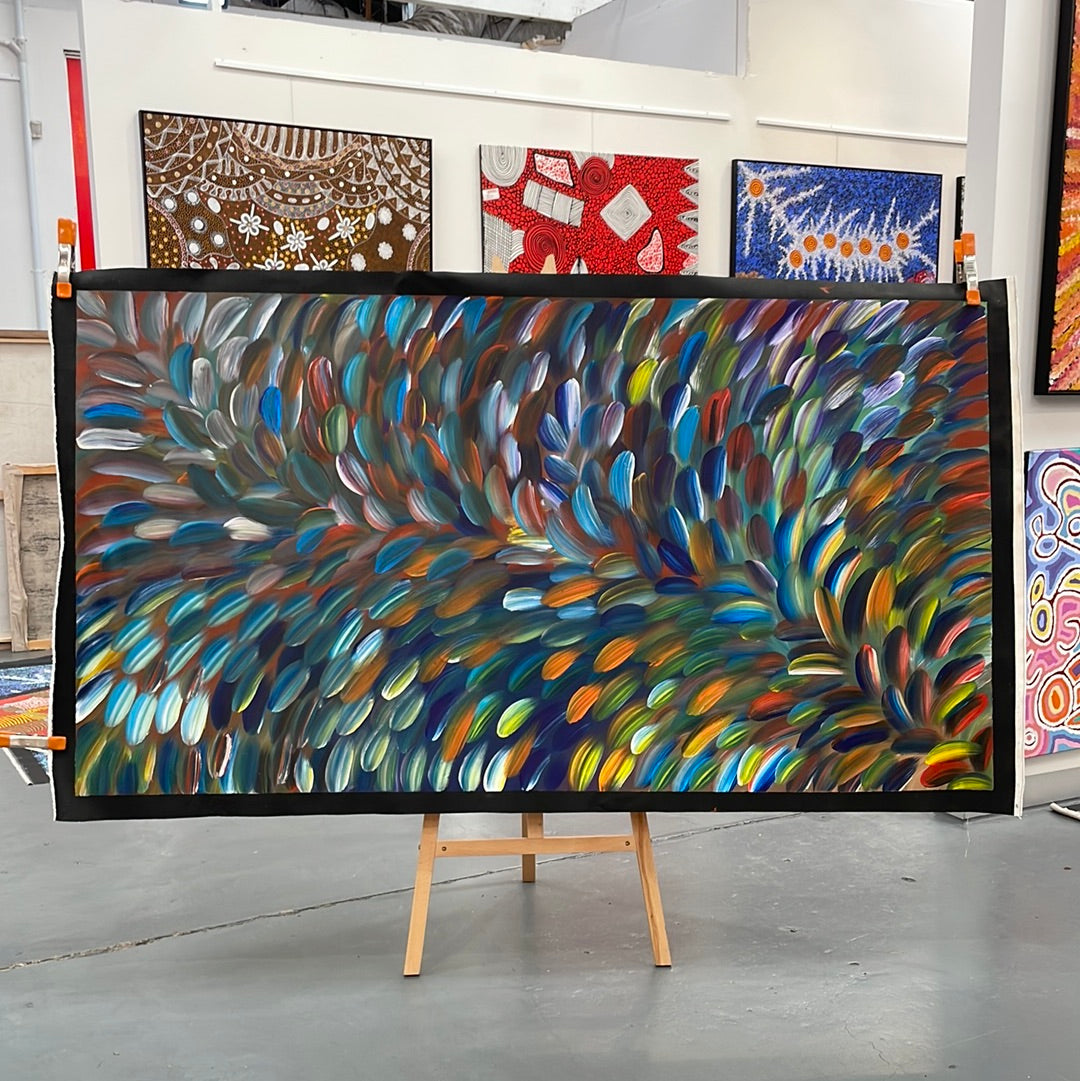
- Flowing Marks: She used long, curvilinear brushstrokes that mimic the organic movements of nature—the wind through the grass or leaves falling to the ground.
- Layered Surfaces: By building up layers of paint, she created a depth that draws the viewer in, creating an optical movement.
- Rhythm: There is a musicality to her composition; a vibration that hums across the surface.
- Scale: She was never afraid of space, often creating large-scale works that envelop the viewer in the vastness of the Utopia landscape.
Awards, Honours, and Major Exhibitions
Collecting and Authenticity
How to Identify Authentic Works
Since Gloria was a highly prolific spirit who used to paint in different studios, authenticity is an important element of her work collection. A real fragment of the legacy of Gloria must have a clear history, provenance provided by authentic sources such as Dacou, Mbanta or Eden House. Original, high-quality pieces are virtually always accompanied by a Certificate of Authenticity (COA) and, hopefully, photos of Gloria herself with that particular painting, taken during the creation process.
What influences value
Visit Mandel Aboriginal Art Gallery to Buy These Artworks
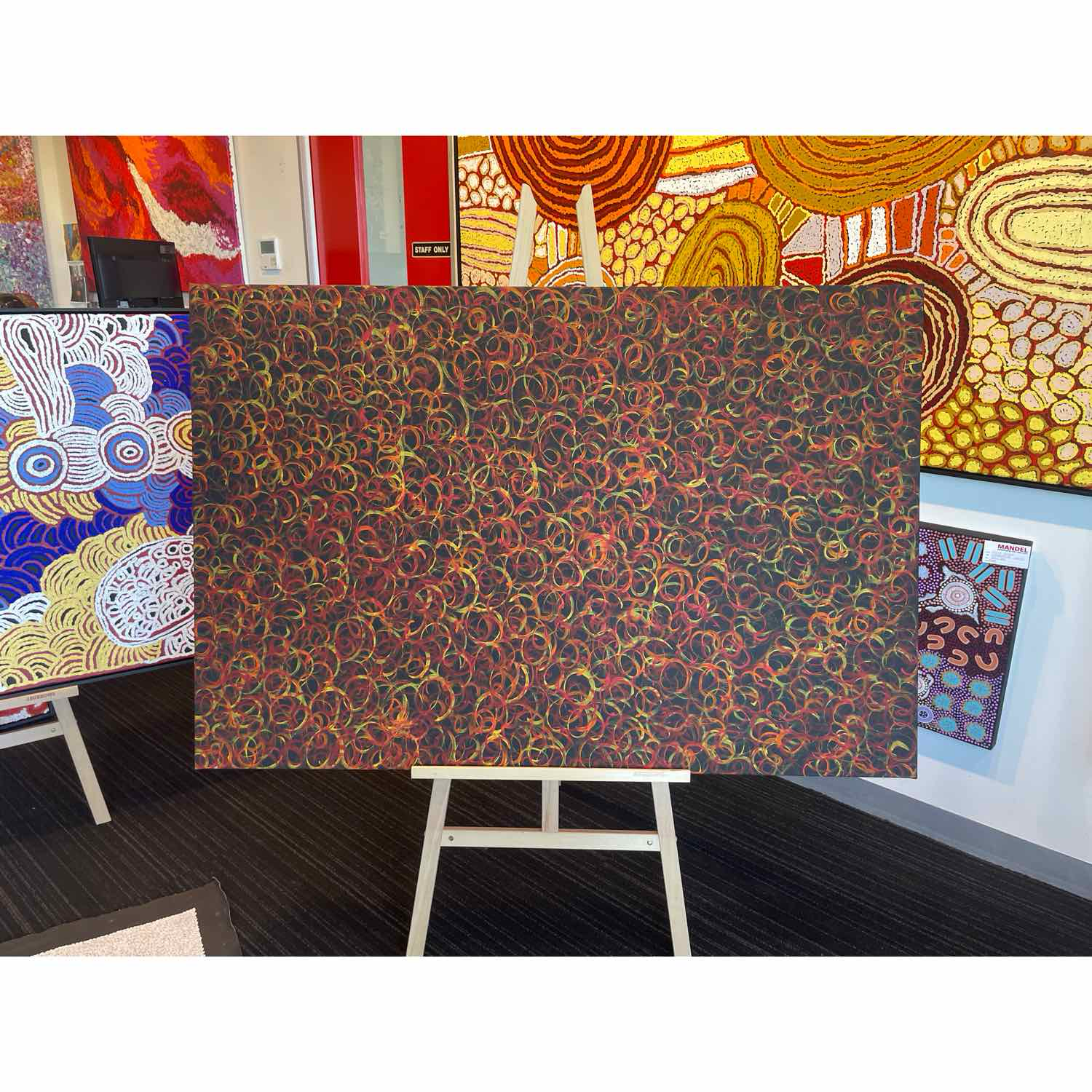
We invite you to immerse yourself in the vibrant world of Gloria Petyarre. Her art serves as a bridge between past and present, connecting us to the timeless beauty and wisdom of the Anmatyerre people.
View Gloria Petyarre's art for sale at Mandel Aboriginal Art Gallery. Come and visit our store or contact us via phone at (03) 9497 5111.
